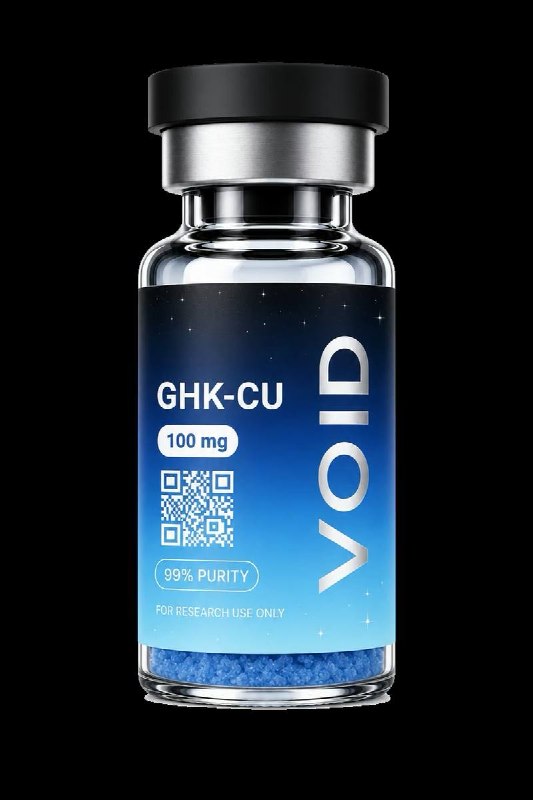
GHK-CU

Price range: $40.00 through $50.00
Explore GHK-Cu, a copper-binding tripeptide studied in biochemical and molecular research. Void Research provides a research-focused product listing for visitors interested in copper peptide science, compound identification, product specifications, and available quality documentation. Review the relevant product information and analytical resources before evaluating this research compound. Strictly intended for qualified laboratory and in-vitro research.
GHK-Cu Copper Peptide – Research Information and Quality Standards
GHK-Cu is a copper-binding peptide that has attracted scientific interest because of its distinctive molecular structure and role in biochemical research. Also known as a copper peptide complex, GHK-Cu consists of the tripeptide glycyl-L-histidyl-L-lysine associated with a copper ion.
Researchers have investigated GHK-Cu in different experimental contexts, including studies involving cellular signaling, skin biology, extracellular matrix processes, and molecular interactions. These areas of scientific investigation make GHK-Cu an interesting subject for researchers exploring peptide chemistry and copper-containing biological compounds.
At Void Research, visitors can explore the GHK-Cu research compound listing and review available product information, specifications, and quality documentation.
What Is GHK-Cu?
GHK-Cu is a complex formed by the naturally occurring tripeptide GHK and copper. The GHK sequence contains three amino acids: glycine, histidine, and lysine.
Copper is an essential trace element involved in numerous biological processes. Its interactions with proteins and other molecules have made copper-containing compounds an important subject in biochemical research.
The GHK-Cu complex is particularly interesting because researchers can investigate its molecular structure, copper-binding characteristics, and behavior under different experimental conditions.
When researching GHK-Cu, it is important to distinguish between the free GHK peptide and its copper-associated form. These terms describe related but distinct chemical contexts and should not automatically be treated as interchangeable.
Why Is GHK-Cu Studied in Scientific Research?
GHK-Cu has been discussed in scientific literature involving several areas of molecular and cellular biology.
Research interests include:
- Copper-binding characteristics and molecular interactions.
- Peptide structure and chemical stability.
- Cellular signaling processes.
- Extracellular matrix research.
- Experimental skin biology.
- Biochemical interactions involving copper-containing compounds.
These topics represent areas of scientific investigation rather than established product benefits. Experimental findings should be interpreted according to the study design, research model, and quality of the available evidence.
Understanding GHK-Cu Product Quality
When evaluating a GHK-Cu research compound, product identification and analytical documentation are important considerations.
A product description should clearly identify the compound and provide relevant specifications. Researchers should also examine available documentation to understand what has been tested and which results have been reported.
Important considerations include:
- Compound identification: Confirmation that the material is identified as GHK-Cu.
- Batch information: Identification of the specific production batch.
- Purity information: An explanation of the analytical method used to assess purity.
- Copper-related information: Relevant information about the copper-associated compound.
- Testing documentation: Available laboratory reports and analytical results.
- Storage information: Manufacturer-provided storage and handling requirements.
Reviewing these details can help researchers evaluate the available information more carefully.
GHK-Cu Certificate of Analysis
A Certificate of Analysis (COA) is a document containing analytical results for a particular sample or batch.
For GHK-Cu, researchers may want to review documentation addressing compound identity, purity, and other relevant analytical characteristics.
A COA should be examined as a complete document rather than judged by a single headline percentage. Researchers should check the batch reference, testing laboratory, date, analytical methods, and reported results.
A purity percentage alone does not establish every aspect of quality, including exact copper content, sterility, or suitability for a particular experimental application.
Explore GHK-Cu at Void Research
Void Research provides a research-focused catalog where visitors can explore peptide-related products and laboratory materials.
The GHK-Cu listing is relevant to visitors interested in copper peptide research, molecular chemistry, and biochemical investigation. Product specifications and availability should be confirmed through the current product page.
Researchers exploring GHK-Cu alongside other peptide compounds should evaluate each material individually. Different compounds have different molecular structures, research backgrounds, and analytical requirements.
Visit the Void Research website to explore the available catalog and review the product information provided.
Responsible Research and Laboratory Standards
Responsible research requires accurate compound identification, suitable laboratory facilities, qualified personnel, and appropriate handling procedures.
Researchers should review relevant safety information, applicable regulations, and institutional requirements before working with any research material.
GHK-Cu research findings should not be interpreted as proof that a commercial research product is effective for skin rejuvenation, wound healing, hair growth, or another medical or cosmetic purpose.
Research-use products are not automatically approved medicines, cosmetics, or dietary supplements.
Discover GHK-Cu Research Information
GHK-Cu remains an interesting subject in peptide and copper-related biochemical research. Its distinctive molecular structure provides opportunities for investigating copper-binding properties and other scientific questions.
Explore the GHK-Cu listing at Void Research to review available product specifications, research information, and quality documentation.
Research-use disclaimer: This product is strictly intended for qualified laboratory and in-vitro research. It is not intended for human or veterinary consumption, administration, diagnosis, treatment, cure, prevention, or clinical application. It is not a cosmetic or dietary supplement. Follow applicable regulations and laboratory safety requirements.
| MG | 50mg, 100mg |
|---|


Reviews
There are no reviews yet.